
Sports Mouthguards for Oshawa Kids and Teens This Summer

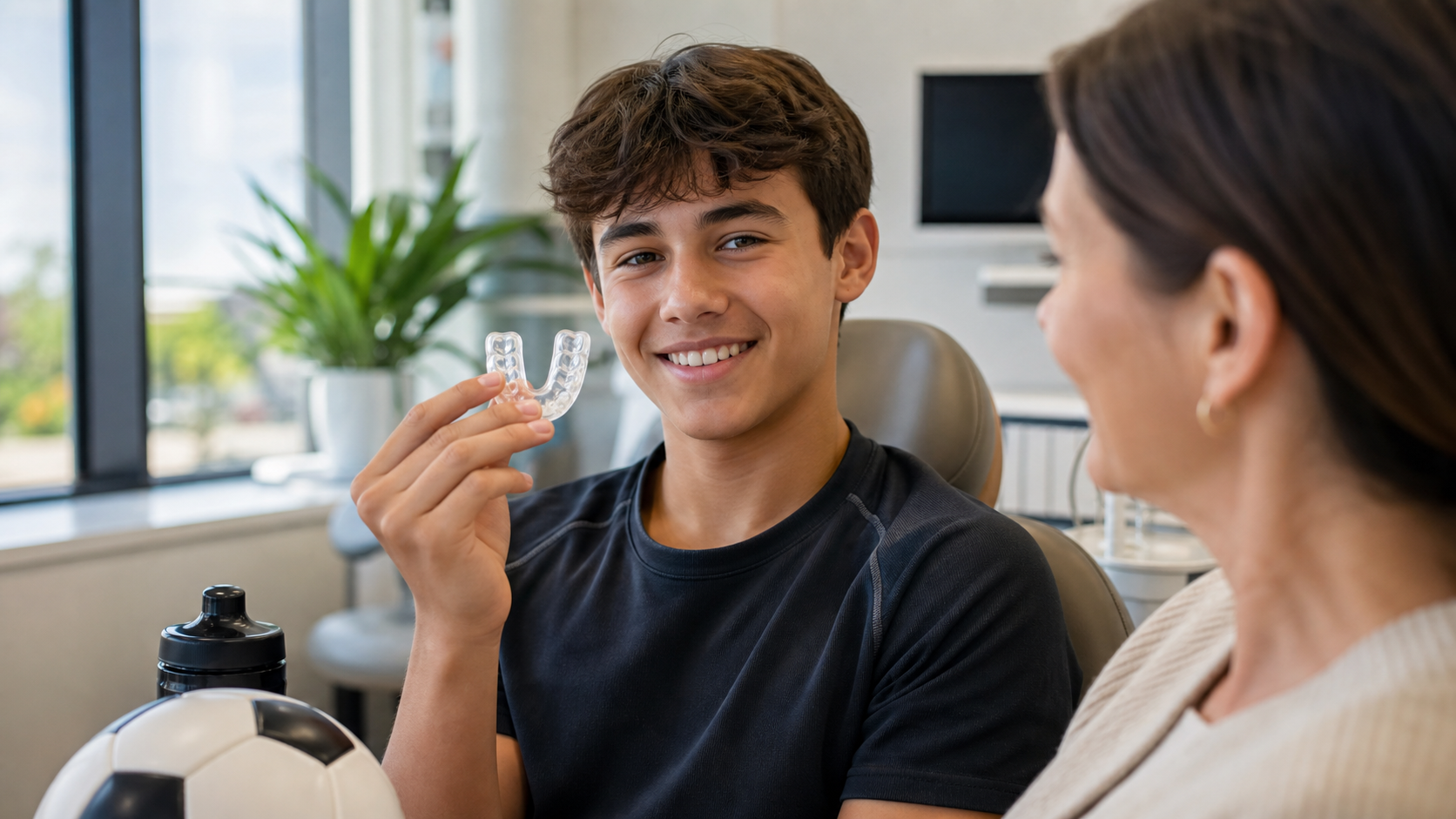
Summer sports, camps, and weekend leagues can be a great part of growing up in Oshawa. Soccer, basketball, hockey, lacrosse, football, martial arts, skateboarding, and other active hobbies all come with normal bumps and contact. A well-fitting sports mouthguard is one practical way to help protect a child or teen's teeth, lips, cheeks, and jaw during play.
Mouthguards are easy to overlook until last year's appliance no longer fits, a child starts a new sport, or a dental injury happens. For many families, a routine dental checkup is the simplest time to ask whether a mouthguard makes sense and whether the current one is still doing its job.
Why fit matters
A mouthguard only helps when it is worn consistently. If it feels too bulky, slips out of place, makes breathing or speaking difficult, or rubs against the gums, a child may be less likely to keep it in during practice and games. Fit can also change quickly as kids and teens grow, lose baby teeth, start orthodontic treatment, or have dental work completed.
Store-bought mouthguards may be useful for some short-term needs, but they are not all the same. A boil-and-bite mouthguard that worked at the start of the season may not still fit well after a growth spurt or dental change. A custom sports mouthguard made through a dental office is designed around the patient's mouth, which can often make it more stable and comfortable.
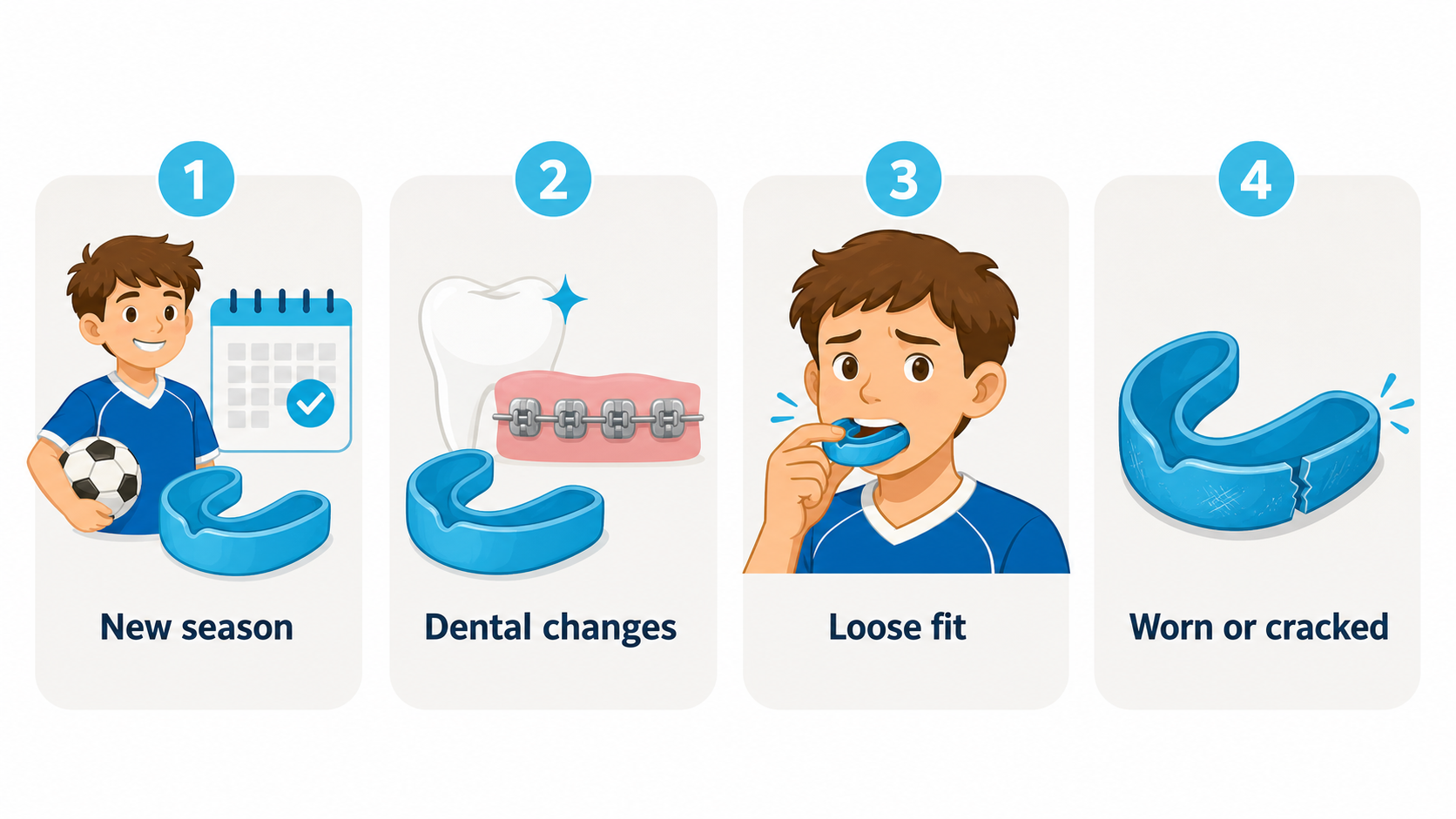
When should a mouthguard be checked?
Oshawa families should consider checking a sports mouthguard before a new season, after braces or other dental changes, if the fit feels loose or bulky, or when the appliance looks worn, cracked, chewed, or distorted. It is also worth reassessing if your child has new fillings, crowns, missing baby teeth, retainers, or ongoing orthodontic treatment.
Bring the mouthguard to a dental appointment if you are unsure. The dental team can look at the fit, check for worn areas, and talk through whether replacement or a different option may be appropriate.
Sports and activities where protection may help
Mouthguards are commonly discussed for contact and collision sports such as hockey, football, rugby, lacrosse, martial arts, boxing, and basketball. They can also be useful in sports where falls, elbows, sticks, balls, boards, or hard surfaces are possible, including soccer, baseball, volleyball, skateboarding, cycling, and recreational camp activities.
Every child is different, so the right recommendation depends on the sport, age, dental history, comfort, and whether orthodontic appliances are involved. If your child has braces, do not assume an old mouthguard will work. Ask for guidance before the season starts.
How to care for a sports mouthguard
A mouthguard should be rinsed after use, brushed gently with a toothbrush, allowed to dry, and stored in a ventilated case. Avoid leaving it in a hot car or sports bag where heat and pressure can distort the shape. If it develops an odour, rough edges, cracks, or areas that look thin, bring it in or replace it.
Children and teens should also avoid chewing on the mouthguard between plays. Chewing can shorten its life and change the fit. Labelling the case and keeping it with the rest of the sports gear can help make wearing it part of the routine.
Ask King Park Dental about mouthguards in Oshawa
King Park Dental is located at 292 King Street West in Oshawa and sees families from across Oshawa and nearby Durham Region communities. If your child or teen is due for a checkup, starting a new sport, wearing braces, or has outgrown last season's mouthguard, our team can review options and help you plan the next step.
Booking before the busiest part of the season gives families time to ask questions, check fit, and avoid rushing when practices and tournaments are already underway.


Comments